Delia Smith Chicken Puttanesca Recipe
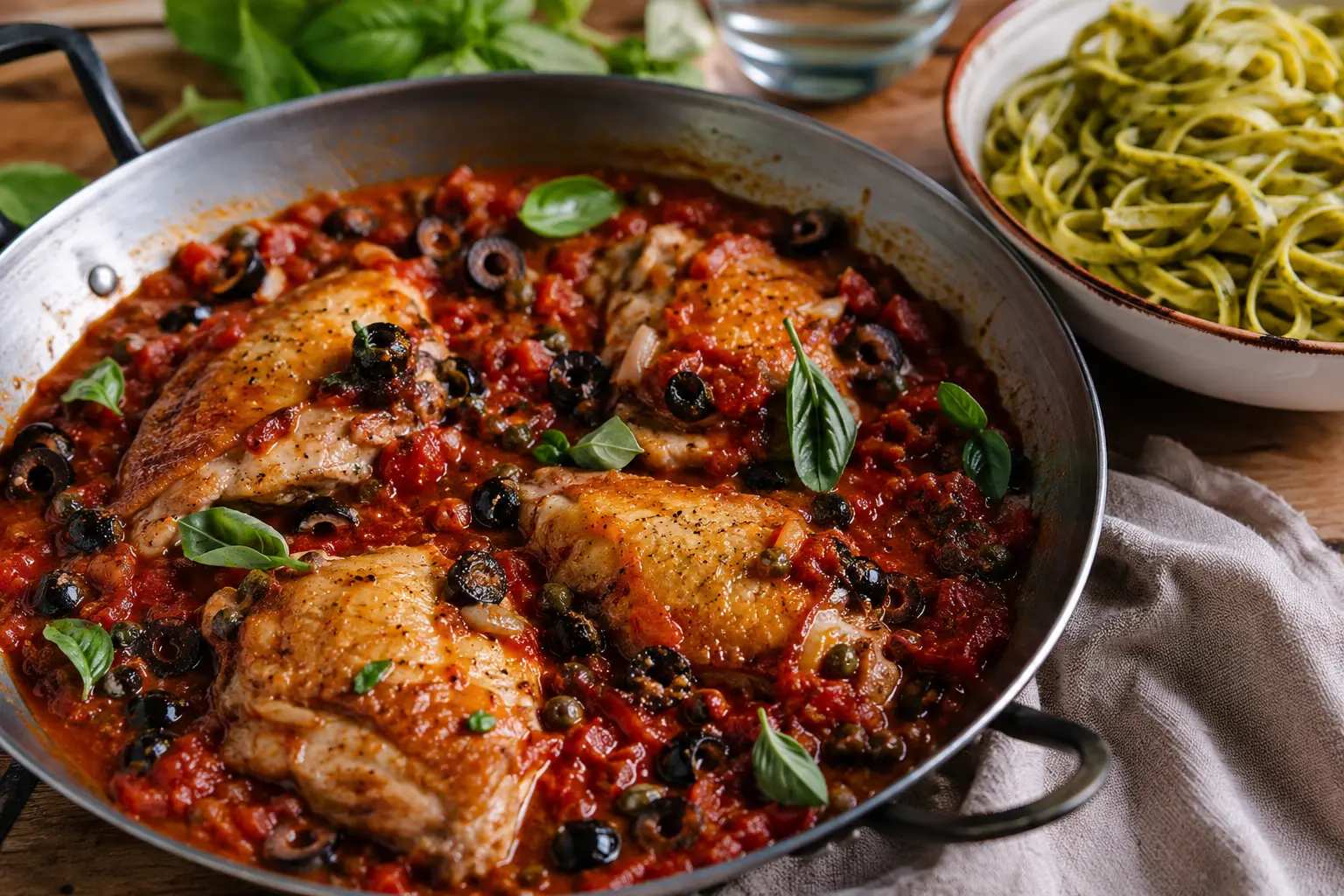
Delia Smith’s Chicken Puttanesca takes the bold flavours normally associated with puttanesca pasta and turns them into a hearty chicken dinner. Skin-on chicken breasts are browned first, then gently cooked in a tomato sauce with garlic, chilli, olives, capers and basil.
The result is a rich, savoury sauce with plenty of Mediterranean character. The chicken cooks directly in the sauce, allowing the flavours to develop together while the tomatoes reduce to a thicker consistency.
This recipe is associated with Delia Smith’s The Delia Collection: Chicken. It is presented here as an independent recipe guide, with additional practical information for home cooks.
Quick Recipe Overview
Recipe: Delia Smith Chicken Puttanesca
Cuisine: Italian-inspired / Mediterranean
Course: Main course
Preparation time: 15 minutes
Cooking time: 40–45 minutes
Total time: About 1 hour
Servings: 4
Difficulty: Easy to moderate
Best served with: Spinach tagliatelle
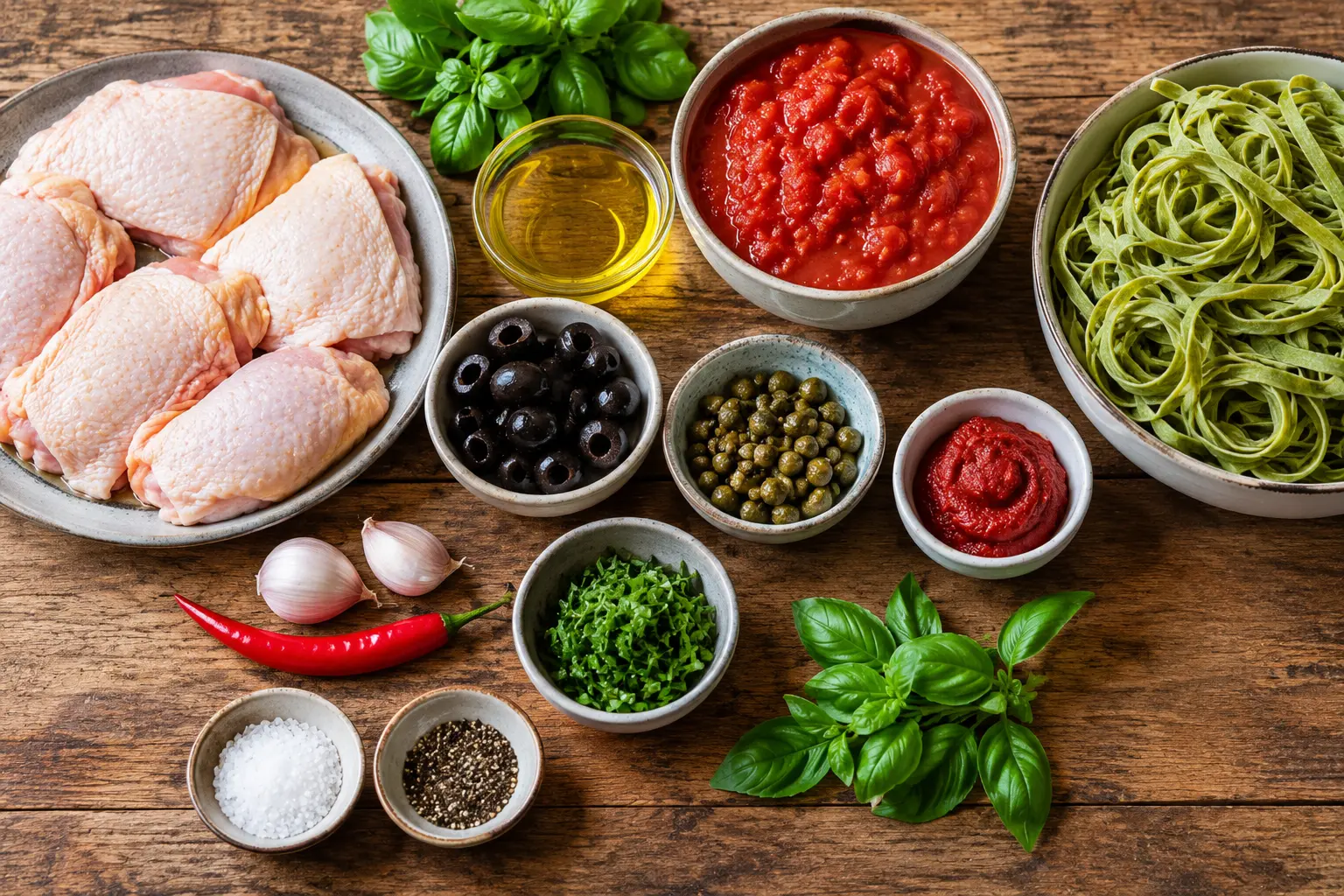
Ingredients
For the Chicken Puttanesca
- 4 part-boned chicken breasts, approximately 225g (8 oz) each, skin on
- 2 tablespoons extra virgin olive oil
- 2 cloves garlic, crushed
- 1 fresh red chilli, deseeded and finely chopped
- 400g (14 oz) tinned Italian chopped tomatoes
- 1 rounded tablespoon tomato purée
- 175g (6 oz) pitted black olives, roughly chopped
- 1 heaped tablespoon capers, rinsed and drained
- 1 tablespoon fresh basil, chopped, plus extra basil to garnish
- Salt and freshly milled black pepper
To Serve
- 350g (12 oz) dried spinach tagliatelle
How to Make Chicken Puttanesca
1. Brown the chicken
Heat the olive oil in a large, heavy-based frying pan or shallow casserole.
Pat the chicken breasts dry and season them with salt and freshly ground black pepper. Add them to the hot oil and cook over a medium heat until the skin is well browned and the other side has taken on some colour, around 5–6 minutes in total.
Transfer the chicken to a plate.
2. Cook the garlic and chilli
Reduce the heat slightly and add the crushed garlic and chopped chilli to the oil remaining in the pan.
Cook briefly, stirring, until the garlic becomes fragrant. Take care not to let it burn, as burnt garlic can make the finished sauce bitter.
3. Make the puttanesca sauce
Add the chopped tomatoes, tomato purée, olives, capers and chopped basil to the pan.
Season with black pepper and a little salt, bearing in mind that both the olives and capers can already be quite salty.
Stir everything together and bring the sauce to a gentle simmer.
4. Return the chicken to the pan
Place the browned chicken breasts back into the sauce with the skin facing upwards.
The chicken should sit partly in the tomato mixture rather than being completely submerged. Spoon a little sauce around and over the meat, while leaving the skin exposed as much as possible.
Covering is not necessary. Let the chicken simmer gently for approximately 40–45 minutes, until cooked through and the sauce has reduced to a thick, rich consistency.
5. Cook the tagliatelle
Around 15 minutes before the chicken is ready, bring a large saucepan of salted water to the boil.
Cook the spinach tagliatelle according to the packet instructions until tender. Drain thoroughly.
6. Check and serve
Check that the chicken is completely cooked through before serving.
Taste the sauce and adjust the seasoning if necessary. Spoon the tomato, olive and caper sauce over the chicken and serve with the drained spinach tagliatelle.
Finish with a few fresh basil leaves or sprigs.
Why Chicken Puttanesca Works
Puttanesca is traditionally known for its combination of tomatoes, olives, capers, garlic and chilli. With chicken, those same ingredients become the base of a more substantial main course.
The chicken is browned before it goes into the sauce, adding another layer of savoury flavour. As it cooks, the tomato mixture reduces and becomes thicker, making it ideal for spooning over the chicken and pasta.
Keeping the chicken skin on also helps protect the meat during the longer cooking time and gives you a more satisfying contrast between the browned skin and the soft tomato sauce.
Why Use Part-Boned Chicken Breasts?
Part-boned breasts are particularly suitable for this recipe because the bone can help the meat remain moist during the simmering stage.
They also retain the attractive shape of a whole chicken breast when served.
If using boneless chicken breasts, avoid automatically following the full cooking time. Smaller or thinner pieces can cook considerably faster, so check them earlier and cook only until they reach a safe internal temperature.
The Importance of the Olives and Capers
Olives and capers provide much of the distinctive salty, savoury character of puttanesca.
Because both ingredients can vary considerably in saltiness, season the sauce carefully rather than adding a large amount of salt at the beginning.
Rinsing the capers before adding them also helps remove some of their brine.
Can You Use Chicken Thighs?
Yes. Bone-in chicken thighs are a good alternative if you prefer darker meat.
They can tolerate longer cooking particularly well and tend to remain juicy. Keep the skin on if you want the rendered chicken fat and browned skin to contribute to the finished dish.
Cooking time may vary depending on the size of the thighs, so check that the meat is fully cooked before serving.
Can You Use Boneless Chicken?
Yes, but boneless chicken breasts generally require less cooking time than bone-in pieces.
Start checking them well before the 40-minute mark. Overcooking lean chicken breast can make it dry, particularly once it has spent a long time simmering.
What to Serve With Chicken Puttanesca
The spinach tagliatelle provides the classic accompaniment in this recipe.
The pasta can be served alongside the chicken so that the tomato sauce remains concentrated around the meat, or you can spoon some of the sauce over the pasta immediately before eating.
A simple green salad or lightly dressed vegetables would also work well if you want to keep the meal lighter.
Can You Make Chicken Puttanesca Ahead?
Yes. The tomato sauce can be prepared ahead, and the finished dish can be reheated gently.
If making the chicken ahead, cool it promptly and refrigerate it once it has stopped steaming. Reheat thoroughly before serving.
The pasta is best cooked fresh rather than stored with the sauce, as freshly cooked tagliatelle will have a better texture.
Can You Freeze Chicken Puttanesca?
The chicken and tomato sauce can be frozen, provided they are cooled and stored correctly.
Freeze in a suitable airtight container and defrost thoroughly in the refrigerator before reheating.
Cook the tagliatelle fresh when serving rather than freezing it together with the sauce.
Nutrition
Nutrition values depend on the exact ingredients and serving sizes used.
- Calories: 720 kcal
- Protein: 45 g
- Carbohydrates: 75 g
- Fat: 30 g
- Saturated Fat: 6 g
- Fibre: 7 g
- Sugars: 9 g
- Sodium: 1,000
Frequently Asked Questions
Is chicken puttanesca the same as puttanesca pasta?
The flavours are closely related, but the dishes are prepared differently. Traditional pasta puttanesca uses the tomato, olive and caper mixture as a pasta sauce, whereas this version cooks the chicken directly in the sauce.
Can I leave out the capers?
You can, although the capers contribute an important salty, sharp note to the dish. If you dislike them, simply omit them rather than trying to replace them with a large amount of additional salt.
Can I use green olives?
Black olives are specified for this recipe. Green olives have a different flavour and texture, so substituting them will change the character of the dish.
Can I make this without chilli?
Yes. Simply omit the fresh chilli if you prefer a milder sauce. The olives, capers, garlic and tomatoes will still provide plenty of flavour.
How do I know when the chicken is cooked?
The safest approach is to check the thickest part of the chicken with a food thermometer and ensure it has reached a safe internal temperature. The meat should no longer be raw in the centre.
Can I use ordinary tagliatelle?
Yes. Spinach tagliatelle is the specified accompaniment, but ordinary dried tagliatelle can be used if spinach pasta isn’t available.
Storage
Refrigerate leftover chicken and sauce promptly in a covered container and use within a safe refrigerated storage period.
When reheating, heat the chicken and sauce thoroughly. If the sauce has become too thick in the refrigerator, loosen it with a small splash of water while reheating.
Cook fresh pasta separately.
More Chicken Recipes
If you enjoy classic chicken recipes, you may also like:
Delia Smith Chicken Puttanesca
Course: DinnerCuisine: ItalianDifficulty: Easy4
servings15
minutes40
minutes720
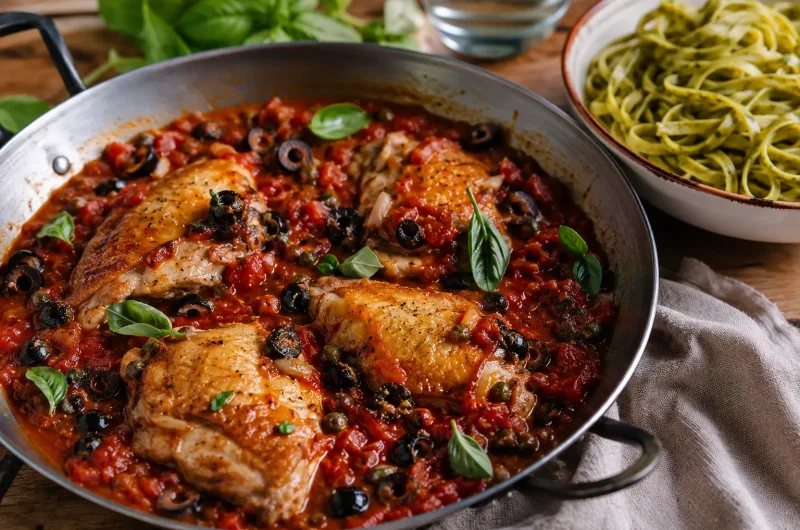
kcalDelia Smith’s chicken puttanesca recipe is from The Delia Collection: Chicken, and it takes her famous puttanesca pasta sauce and uses it to braise skin-on chicken breasts for 40 minutes until the olives, capers, garlic, and tomatoes cook down into something thick and gutsy that clings to the meat.
Ingredients
4 part-boned chicken breasts (about 225g / 8 oz each), skin on
175g (6 oz) pitted black olives, roughly chopped
1 heaped tablespoon capers, rinsed and drained
Salt and freshly milled black pepper
1 tablespoon fresh basil, chopped, plus extra basil sprigs to garnish
1 rounded tablespoon tomato purée
400g (14 oz) tinned Italian chopped tomatoes
1 fresh red chilli, deseeded and finely chopped
2 cloves garlic, crushed
2 tablespoons extra virgin olive oil
Directions
- Brown the chicken:Heat the oil in a large pan. Season the chicken and brown on both sides for 5–6 minutes. Remove and set aside.
- Make the sauce:Add garlic and chilli to the pan and cook for 30 seconds. Add tomatoes, tomato purée, olives, capers and basil. Season and bring to a gentle simmer.
- Cook the chicken: Return the chicken, skin-side up. Simmer uncovered for 40–45 minutes, until cooked through and the sauce has thickened.
- Cook the pasta: About 15 minutes before the chicken is ready, cook the spinach tagliatelle according to the packet instructions. Drain.
- Serve: Serve the chicken and puttanesca sauce with the tagliatelle. Garnish with fresh basil.
Notes
- Keep the chicken skin on for the intended texture and flavor.
- Season cautiously because olives and capers can add considerable salt.