
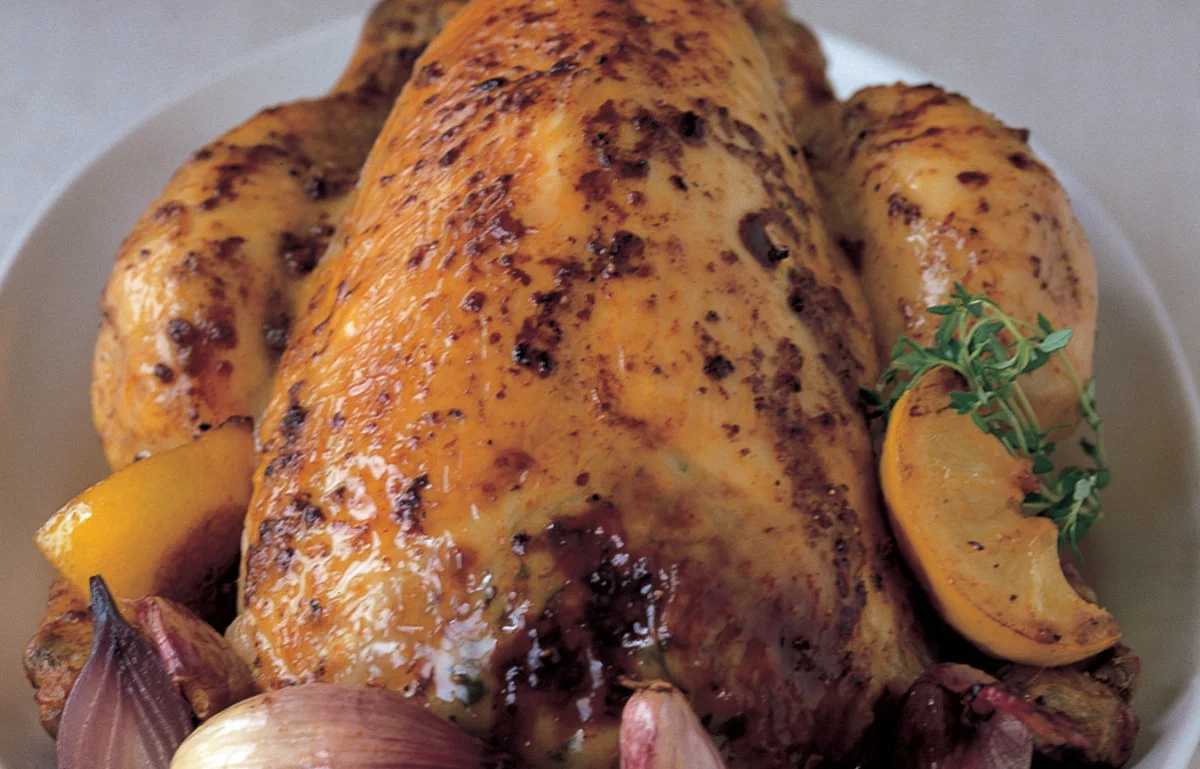
Delia Smith Roast Chicken Recipe – Classic British Sunday Roast
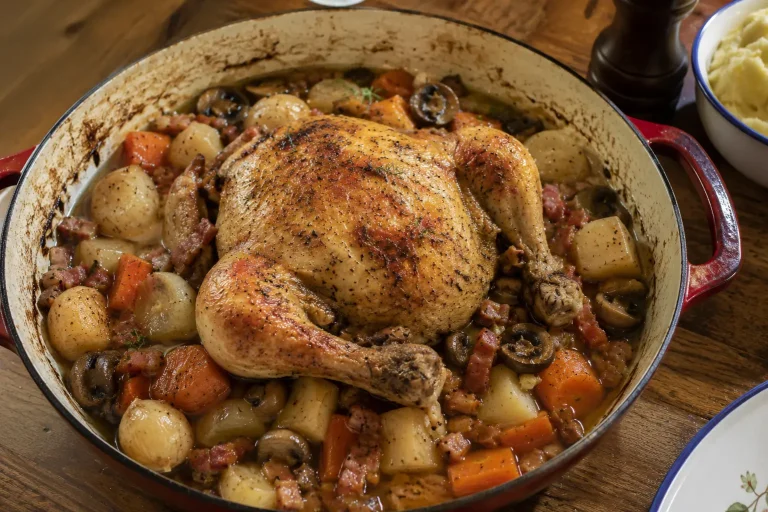
A good roast chicken comes down to a handful of things done properly rather than any clever trick: a dry bird, a hot oven to start, and enough patience at the end to let it rest before carving. Skip any one of those and you’ll usually end up with pale skin or dry meat — most roast chicken problems trace back to one of these three steps rather than the recipe itself.
This version follows that same method-first approach — nothing fussy, no unusual ingredients, just the basics done in the right order. Follow the timing by weight rather than guessing, don’t skip the resting step, and you’ll get a bird worth carving at the table.
Editorial Note: Our version is independently developed and tested, inspired by Delia Smith’s classic, method-first approach to cooking. It is not presented as an official Delia Smith recipe, and this site is not affiliated with Delia Smith, her publishers, or Delia Online.
Why This Roast Chicken Works
- Crisp skin without constant basting — one baste halfway through is plenty
- Just a roasting tin and, ideally, a meat thermometer (they’re inexpensive and take the guesswork out of doneness)
- Timing worked out by weight rather than trial and error
- Pan juices double as the base for a simple gravy, no extra stock needed
- Buy a slightly bigger bird than you need — the leftovers are worth it, see our Leftover Roast Chicken guide
Quick Recipe Summary
| Prep time | 15 minutes |
| Cook time | 1 hour 20 minutes (for a 1.8kg bird) |
| Total time | 1 hour 35 minutes, plus 20 minutes resting |
| Serves | 4–6 |
| Oven temp | 220°C (200°C fan) / 425°F / Gas Mark 7, reduced to 190°C (170°C fan) / 375°F / Gas Mark 5 |
| Difficulty | Easy |
| Cuisine | British |
| Category | Sunday Roast, Main Course |
Ingredients
For the chicken:
- 1 whole chicken (1.8–2kg), giblets removed
- 50g butter, softened
- 1 lemon, halved
- 1 small bunch fresh thyme (or 2 tsp dried)
- 4 garlic cloves, unpeeled and lightly crushed
- 1 onion, quartered
- 2 tsp sea salt
- 1 tsp freshly ground black pepper
- 2 tbsp olive oil
For the gravy (optional but recommended):
- Pan juices from the roasting tin
- 1 tbsp plain flour
- 300ml chicken stock (or vegetable water)
- Salt and pepper, to taste
Method
- Prepare the chicken. Remove the chicken from the fridge at least 30 minutes before roasting to bring it closer to room temperature — this helps it cook more evenly. Pat the skin completely dry with kitchen paper; a dry surface is the single biggest factor in getting crisp skin.
- Season generously. Rub the softened butter all over the skin, then season well with the sea salt and pepper, working it into the skin with your hands. Stuff the cavity with the lemon halves, thyme, garlic cloves, and half the onion. Scatter the remaining onion in the base of the roasting tin.
- Preheat the oven to 220°C (200°C fan) / 425°F / Gas Mark 7.
- Truss and place. Tie the legs together with kitchen string if you have it — this helps the bird cook more evenly and holds its shape. Place the chicken breast-side up in the roasting tin, drizzle with the olive oil, and season the skin once more.
- Roast at high heat first. Roast for 20 minutes at the high temperature to kick-start crisping the skin.
- Reduce the heat. Turn the oven down to 190°C (170°C fan) / 375°F / Gas Mark 5. Continue roasting for about 1 hour, basting once halfway through with the pan juices if you’d like extra colour (this is optional — it’s not essential for crisp skin and opening the oven repeatedly will slow cooking). As a general guide, allow roughly 45 minutes per kilogram in total, including the initial high-heat stage — about 1 hour 20 minutes altogether for a 1.8kg bird.
- Check for doneness. The chicken is done when a meat thermometer inserted into the thickest part of the thigh (not touching bone) reads 74°C, or when the juices run completely clear and there’s no pink near the bone.
- Rest before carving. Move the chicken to a board, tent loosely with foil, and leave it for at least 20 minutes before carving. It’s tempting to skip this when the kitchen smells like this, but carving too early is the most common reason for dry meat — the juices need time to settle back through the meat rather than run straight out onto the board.
- Make the gravy. While the chicken rests, place the roasting tin over a medium heat on the hob. Stir in the flour and cook for 1 minute, scraping up all the browned bits from the base of the tin. Gradually whisk in the stock, bring to a simmer, and cook for 3–4 minutes until thickened. Season to taste and strain if you prefer a smooth gravy.
- Carve and serve. Carve the chicken and serve with the gravy alongside your favourite Sunday roast trimmings.
Try More Recipes:
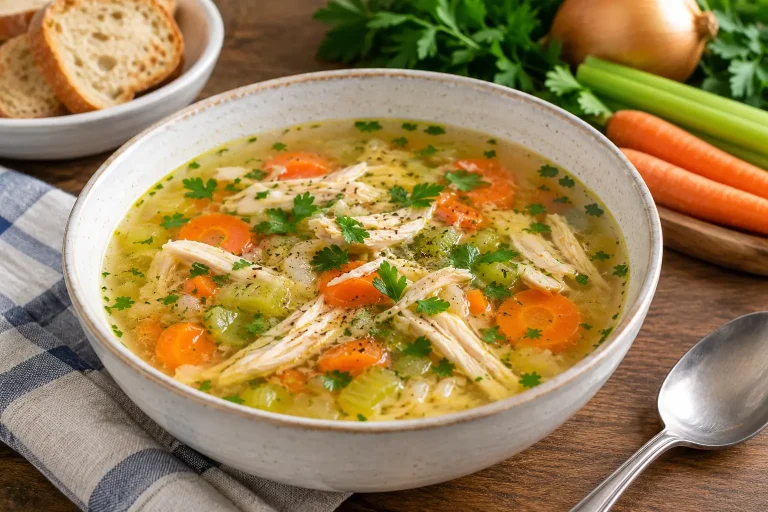
- Delia Smith Chicken Soup Recipe
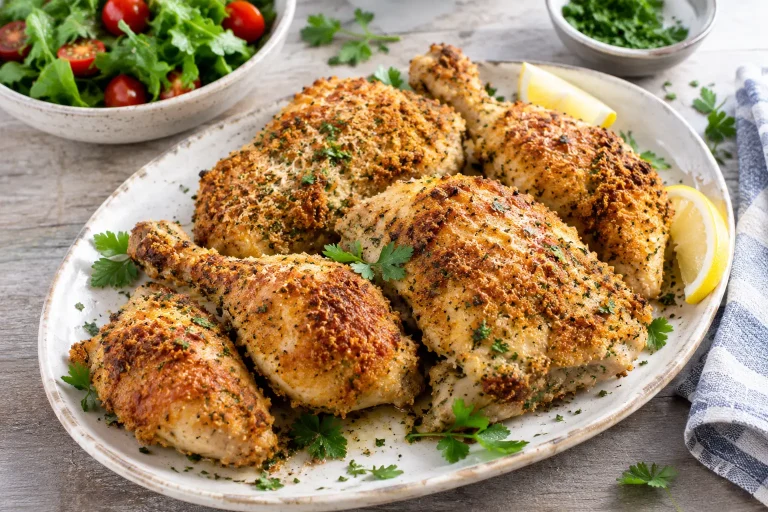
- Delia Smith Parmesan Chicken Recipe
- Delia Smith Chicken in the Pot Recipe
Recipe Tips
Dry the skin properly A quick pat with kitchen paper isn’t enough — dry it thoroughly, all over, and if you have time, leave the chicken uncovered in the fridge for an hour before roasting. This matters more than any seasoning choice for getting the skin to crisp up.
Work out timing by weight, not by eye Roughly 45 minutes per kilogram in total, including the initial high-heat blast. For a 1.8kg bird that’s about 1 hour 20 minutes cooking time altogether — worth doing the maths rather than guessing, since ovens vary more than people expect.
Don’t skip the rest Twenty minutes feels like a long wait once the chicken’s out of the oven, but carving straight away is the quickest way to end up with dry meat and a puddle of juice on the board instead of in the chicken.
Give it space in the tin A tin that’s too small traps steam around the bird, which works against crisp skin. Use a tin with room for air to circulate around the chicken, not just around the edges.
Why Is My Roast Chicken Dry?
The most common causes are overcooking (use a thermometer rather than relying on time alone, since ovens vary), skipping the resting step, or roasting a smaller bird for a larger bird’s cooking time. If you’ve had dry chicken before, a meat thermometer is the single best fix — pull it at 74°C in the thigh, not a minute later.
Why Isn’t My Chicken Skin Crispy?
Usually one of three things: the skin wasn’t dry enough before it went in, the oven wasn’t hot enough at the start, or the tin was overcrowded and trapped steam. Over-basting can also work against you, since it wets the skin repeatedly instead of letting it dry and crisp.
Substitutions
Can I make this without butter? Yes — olive oil works well as a dairy-free alternative, though butter gives a richer flavour and slightly better browning.
Can I use a smaller or larger bird? Yes, just adjust the timing using the roughly-45-minutes-per-kilogram formula (including the initial high-heat blast), and always confirm doneness with a thermometer rather than time alone.
Herb variations Rosemary and garlic, or tarragon and lemon, both work well in place of thyme.
Variations
Lemon and Herb Roast Chicken — Double the lemon and add a handful of chopped parsley to the butter rub.
Garlic Butter Roast Chicken — Mash extra roasted garlic into the pan juices for the gravy for a deeper, sweeter garlic flavour.
Spatchcock Roast Chicken — Ask your butcher to spatchcock the bird (or do it yourself by removing the backbone and flattening it). This cuts cooking time by roughly a third and gives even more crispy skin surface area.
How to Store
Leftover chicken keeps well in an airtight container in the fridge for up to 3 days. Remove the meat from the bone before storing to speed up cooling and make it easier to use in leftover recipes.
Can You Freeze It?
Yes — shredded cooked chicken freezes well for up to 3 months. Freeze in flat, labelled bags for quick defrosting. We don’t recommend freezing a whole roasted bird, as it doesn’t reheat evenly.
Serving Suggestions
Serve with classic Sunday roast trimmings: crisp roast potatoes, Yorkshire puddings, seasonal greens, and bread sauce. See our Chicken recipes hub for more ways to use this method.
Make-Ahead
You can dry-brine the chicken the night before — season generously with salt and leave uncovered on a rack in the fridge overnight. This draws out moisture from the skin and seasons the meat right through, giving even better results the next day.
Frequently Asked Questions
How long does it take to roast a chicken?
As a general guide, allow roughly 45 minutes per kilogram, including an initial 20 minutes at 220°C (200°C fan) before the oven is turned down to 190°C (170°C fan). A 1.8kg chicken takes about 1 hour 20 minutes cooking time in total, plus 20 minutes resting.
What temperature should a roast chicken be cooked to?
The thickest part of the thigh should reach 74°C on a meat thermometer, with no pink in the juices.
Should I cover the chicken while roasting?
No covering is needed for most of the cooking time — this helps the skin crisp. If it’s browning too quickly, loosely tent with foil for the last 15–20 minutes.
How do I know when it’s done without a thermometer?
Pierce the thickest part of the thigh with a skewer; the juices should run completely clear with no trace of pink.
Can I roast a chicken from frozen?
No — always fully defrost chicken before roasting to ensure it cooks evenly and safely all the way through.
Estimated Nutrition (per serving, serves 6)
| Calories | 420 kcal |
| Fat | 26g |
| Saturates | 9g |
| Carbohydrates | 1g |
| Sugars | 1g |
| Fibre | 0g |
| Protein | 42g |
| Salt | 1.2g |
Nutrition is estimated using standard ingredient data. Actual values will vary depending on exact ingredients and portion sizes used.
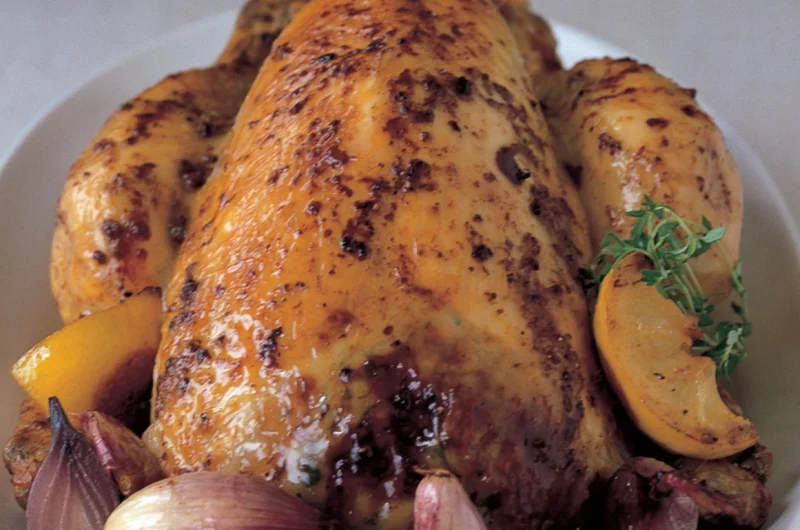
Delia Smith Roast Chicken
Course: ChickenCuisine: BritishDifficulty: Easy4-6
servings15
minutes1
hour20
minutes420
kcal1
hour35
minutesA classic British Sunday roast with crisp golden skin and juicy meat, timed by weight and finished with a simple pan gravy.
Ingredients
1.8 kilograms whole chicken
50 grams butter, softened
1 lemon, halved
A small bunch fresh thyme sprigs
4 garlic cloves, unpeeled and crushed
1 onion, quartered
2 teaspoons sea salt
1 teaspoons black pepper, freshly ground
2 tablespoons olive oil
1 tablespoons plain flour (for gravy)
300 milliliters chicken stock (for gravy)
Directions
- Bring to room temperature: Remove the chicken from the fridge at least 30 minutes before roasting. Pat the skin completely dry with kitchen paper.
- Season and stuff: Rub 50 grams butter, softened all over the skin, then season with 2 teaspoons sea salt and 1 teaspoons black pepper, freshly ground. Stuff the cavity with 1 lemon, halved, 1 cups fresh thyme sprigs, 4 garlic cloves, unpeeled and crushed, and half the 1 onion, quartered. Scatter the rest of the onion in the roasting tin.
- Preheat oven: Preheat the oven to 220°C (200°C fan) / 425°F / Gas Mark 7.
- Truss and place: Tie the legs together with kitchen string if you have it. Place the chicken breast-side up in the tin, drizzle with 2 tablespoons olive oil, and season the skin again
- High-heat roast: Roast for 20 minutes at the high temperature to kick-start crisping the skin.
Reduce heat and continue roasting: Turn the oven down to 190°C (170°C fan) / 375°F / Gas Mark 5. Continue roasting for about 1 hour, basting once halfway through if you like (around 1 hour 20 minutes cooking time in total for a 1.8kg bird). - Check doneness: The chicken is done when a thermometer in the thickest part of the thigh reads 74°C, or the juices run completely clear.
- Rest: Transfer to a board, tent loosely with foil, and rest before carving. Carving too early is the most common cause of dry meat.
- Make the gravy: Place the roasting tin over medium heat. Stir in 1 tablespoons plain flour (for gravy), cook for 1 minute, then gradually whisk in 300 milliliters chicken stock (for gravy). Simmer 3-4 minutes until thickened, then season to taste.
- Carve and serve: Carve the chicken and serve with the gravy and your favourite Sunday roast trimmings.
Notes
- Swap butter for olive oil for a dairy-free version.
My spouse and I stumbled over here different web page and thought
I might check things out. I like what I see so now
i am following you. Look forward to finding out about your web page for
a second time.