Delia Smith Fatless Sponge Recipe
This classic fatless sponge uses just eggs, caster sugar and flour, with no butter or oil. The eggs are whisked with the sugar over a bain-marie before the flour is folded through, producing a light, airy sponge that’s ideal for trifles, layered cakes and Swiss rolls. Either way, it’s ready in around 15 minutes and makes a lovely light bake.
I turn to this recipe for a fatless sponge whenever I need a quick trifle base, or when I want something lighter than a classic Victoria sponge. The trick that makes this fatless sponge Delia Smith method so reliable is the bain-marie step — whisking the eggs in a large heatproof glass bowl set over simmering water. It gives the sponge much more stability than whisking cold ever could.
Fatless Sponge Ingredients
- 3 large eggs, at room temperature
- 75g caster sugar
- 75g plain flour, sifted
- 1 tbsp hot water
- Jam, cream, or fruit, for filling
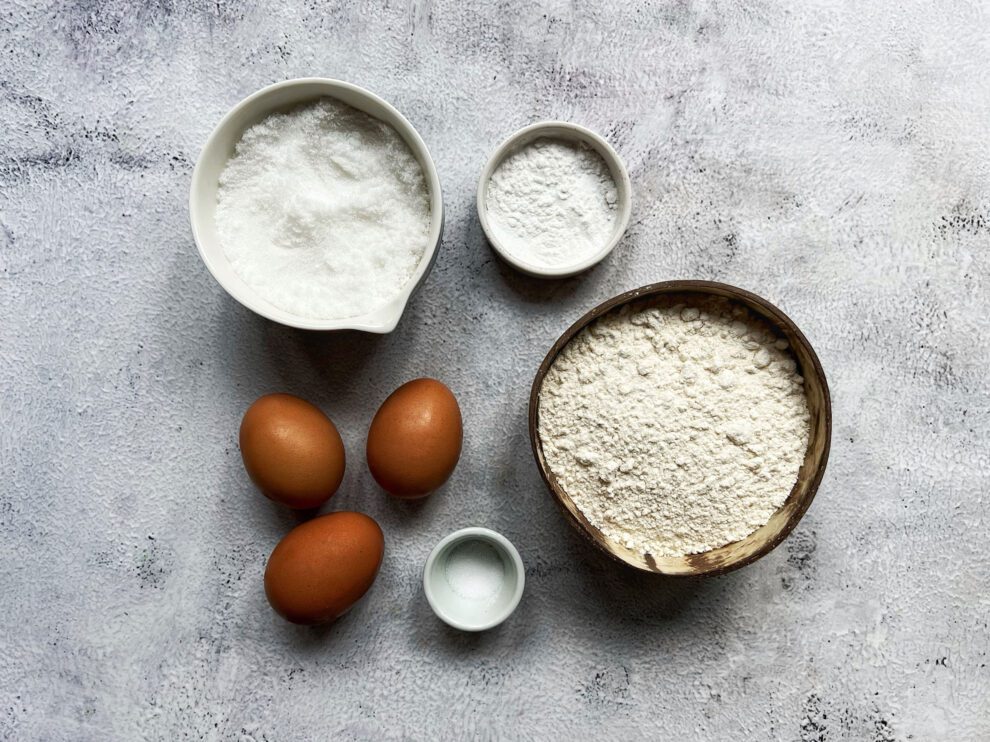
What You’ll Need
- 2 × 18cm sandwich tins
- Large heatproof bowl
- Saucepan for the bain-marie
- Electric hand whisk
- Large metal spoon or spatula
- Baking parchment
Read More Recipes
How to Make Delia Smith fatless sponge
- Get the tins ready. If using a fan oven, use 180°C and start checking a little earlier.. Grease two 18cm sandwich tins and line the bottoms with baking parchment. Dust the sides with a little flour, then tip out any extra.
- Whisk the eggs and sugar. Crack the eggs into a large heatproof bowl and add the sugar. Sit the bowl over a pan of gently simmering water, making sure the bowl doesn’t touch the water. Whisk with an electric hand whisk until the mixture turns pale and thick, and leaves a trail when you lift the whisk out.
- Keep whisking off the heat. Take the bowl off the pan and carry on whisking for about 2 more minutes, until the mixture has cooled down.
- Fold in the flour. Sift half the flour over the top and fold it in gently with a large metal spoon, using a cutting and turning motion. Sift in the rest of the flour and fold it through the same way.
- Stir in the water. Quickly fold in the tablespoon of hot water — this helps the sponge rise well.
- Bake it. Split the mixture evenly between the two tins and tilt them gently so the batter settles flat. Don’t smooth it with a knife, or you’ll knock the air back out. Bake near the top of the oven for 15–20 minutes.
- Cool it down. The sponges are ready when they’re pale golden, springy to touch, and just pulling away from the sides of the tin. Turn them out onto a wire rack straight away and peel off the parchment. Leave to cool fully before filling.
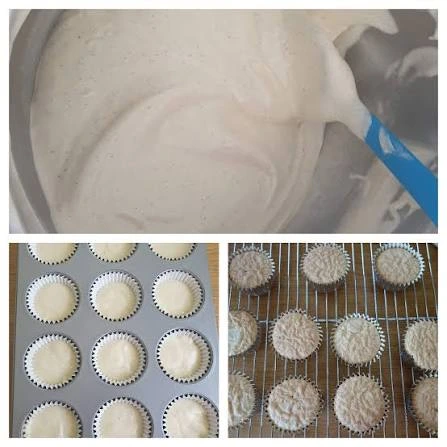
Tips for a Perfect Fatless Sponge
- Use room-temperature eggs. Room-temperature eggs generally whip to a greater volume and incorporate air more readily than cold eggs, so take them out of the fridge about 30 minutes before you start. It’s a small step, but it really affects how well the sponge rises.
- Watch for the ribbon stage. Whisk the eggs and sugar until thick, then trace a figure 8 on top with the whisk. If the trail holds its shape for a few seconds, you’re ready to move on.
- Fold with a metal spoon. Use a large metal spoon or spatula and fold with a cutting-and-turning motion rather than stirring., so you keep the air you’ve just whisked in. A wooden spoon is too heavy-handed for this job.
- Keep everything grease-free. Your bowl and whisk need to be completely clean. Even a little bit of fat will stop the eggs from whisking up properly.
- Turn the cakes out right away. Unlike a butter-based cake, a fatless sponge needs to come out of the tin as soon as it’s baked, or it will stick.
What to Fill a Fatless Sponge With
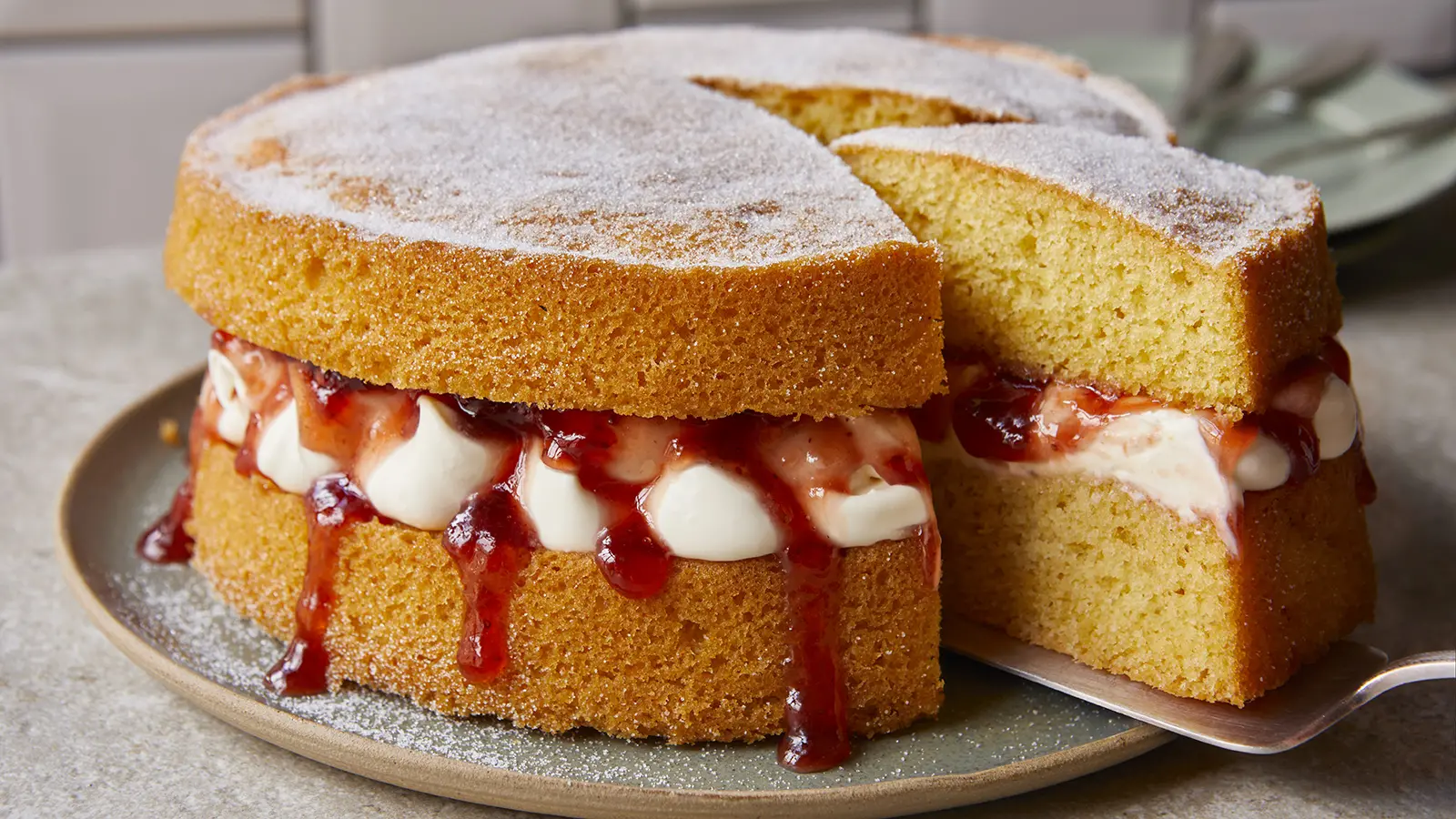
This sponge works as a blank canvas for almost any filling. Raspberry jam and whipped cream give you a classic Victoria sponge flavour, but in a much lighter form. For something zestier, try turning it into a lemon sponge cake instead.
It’s also a great trifle base — just cut it into chunks and soak it in fruit juice. Or bake it in a rectangular tin for 8–10 minutes, then roll it while warm and fill once cool, to make a Swiss roll or yule log.
How Long Does It Keep?
An unfilled sponge will keep in an airtight container for up to 2 days. Because there’s no fat in the mix, it dries out faster than a butter cake, so it’s best eaten fresh.
It also freezes well. Wrap the cooled sponge well in cling film and place it in an airtight freezer-safe container or bag, then freeze for up to 2 months. Let it thaw at room temperature for about 30 minutes before using.
Fatless Sponge Variations
- Chocolate fatless sponge: Swap 15g of the plain flour for cocoa powder, sifting it in with the rest of the flour. This makes a great base for a black forest gateau.
- Lemon fatless sponge: Add the finely grated zest of one lemon to the eggs and sugar before whisking. Fill with lemon curd and cream.
- Coffee fatless sponge: Dissolve 2 teaspoons of instant coffee in the tablespoon of hot water before folding it through. Pair with a coffee buttercream or mascarpone filling.
- Gluten-free fatless sponge: Use a gluten-free plain flour blend instead of regular flour, sifting it twice to keep the sponge as light as possible.
Why Did My Fatless Sponge Go Wrong?
- It collapsed: Either the oven door was opened too soon, or the eggs weren’t whisked enough. The mixture needs to triple in size before you fold in the flour.
- It turned out rubbery: The flour was overmixed. Fold gently with a metal spoon and a cutting motion, and stop as soon as you can’t see any dry flour.
- It’s dry: It was probably baked too long. Start checking at the 15-minute mark — the sponge should be springy but still pale golden, not dark brown.
- The middle sank: The oven wasn’t hot enough, or the batter sat around too long before baking. Once the flour is folded in, get it into the oven straight away.
Nutrition (per slice, based on 6 servings)
- Calories: 140 kcal
- Fat: 2g
- Carbohydrates: 25g
- Protein: 5g
- Dietary Fibre: 0g
Frequently Asked Questions
Can I use self-raising flour instead of plain flour?
You can, but plain flour is the traditional choice for a whisked sponge recipe, since all the rise comes from whisked-in air. Self-raising flour can make it rise too quickly and then sink.
Do I really need to heat the eggs over water?
The bain-marie step helps the sugar dissolve and the egg proteins expand, giving you a much sturdier foam. You can whisk the eggs cold instead, but it takes longer and the results are less consistent.
What’s the difference between a fatless sponge and a Genoise?
A Genoise has a little melted butter stirred in at the end for extra richness. This fatless sponge recipe, in the Delia Smith style, leaves butter out completely — it’s lighter, though it doesn’t keep quite as long.
How does this fatless sponge cake compare to a Mary Berry version?
Both recipes use the same whisked method with eggs, sugar, and flour. A Mary Berry fatless sponge cake sometimes includes an extra egg for more volume, but the two turn out very similar.
Is there a way to make a fat free cake recipe like this gluten-free?
Yes — A gluten-free plain flour blend can be used, although the texture may be slightly different. Choose a blend designed for cakes and sift it well before folding. and sift it twice. It might be a touch denser, but the bain-marie method still helps it rise nicely, so it works well as a fat free cakes recipe option for anyone avoiding gluten.
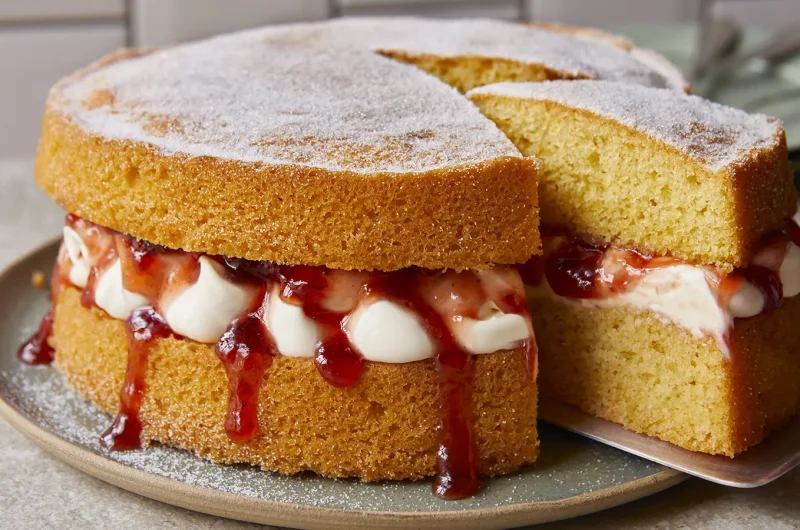
Delia Smith Fatless Sponge Recipe
Course: DessertCuisine: BritishDifficulty: Easy6
servings20
minutes15
minutes140
kcal7
minutes15-20
minutesThis fatless sponge recipe needs just eggs, sugar and flour. No butter, no oil, only air gives it lift. Ready in 35 minutes and perfect as a trifle base or light cake.
Ingredients
3 eggs, at room temperature
75g caster sugar
75g plain flour, sifted
1 tbsp hot water
Jam, cream, or fruit for filling
Directions
- Prepare the tins:Preheat the oven to 200°C (180°C fan), Gas 6. Grease two 18cm sandwich tins and line the bases with baking parchment. Dust the sides lightly with flour and shake out any excess.
- Whisk the eggs and sugar:Place the eggs and sugar in a large heatproof bowl. Set the bowl over a saucepan of barely simmering water, making sure the base does not touch the water. Whisk with an electric hand whisk until pale, thick and mousse-like, and the mixture leaves a trail when the whisk is lifted.
- Continue whisking off the heat:Remove the bowl from the saucepan and whisk for a further 2 minutes, until the mixture has cooled slightly.
- Fold in the flour:Sift half the flour over the egg mixture and gently fold it in using a large metal spoon. Use a cutting-and-turning motion to avoid knocking out the air. Sift in the remaining flour and fold through gently.
- Add the hot water:Quickly fold in the 1 tablespoon of hot water, taking care not to overmix.
- Bake:Divide the mixture evenly between the prepared tins. Tilt each tin gently to level the mixture; don't smooth it with a knife. Bake near the top of the oven for 15–20 minutes, until pale golden, springy to the touch and slightly pulling away from the sides.
- Cool:Turn the sponges out immediately onto a wire rack and carefully peel away the baking parchment. Leave to cool completely before filling or decorating.
Notes
- Use room temperature eggs for maximum volume.
- Whisk until the mixture leaves a ribbon trail.
- Use a metal spoon to fold, never wood.
- Eat within 2 days as fatless sponges stale quickly.